.png)
The Woodland Giving Tree: A Winter Tradition of Kindness
- Alexa Stoia | Hearth & Wander

- Nov 25, 2025
- 5 min read
Updated: Dec 3, 2025
Early winter in the woods feels like a deep, quiet breath. The warm tones of late fall fade into soft neutrals, the aspens stand bare against a crisp sky, and the pines seem to glow brighter as the rest of the forest settles into stillness. The chatter of squirrels and birds has quieted. The hush of a light snow, the crunch of boots on a frozen trail, and the rare flash of movement from a wintering creature create a kind of wonder that’s hard to describe but easy to feel.

And if your family is anything like ours, the colder months bring all kinds of nostalgic rituals to enjoy the simple pleasures in life: cutting our own Christmas tree at the cabin the day after Thanksgiving, slow walks in the woods, watching for the remaining wildlife, and the constant search for small ways to make the season feel meaningful.
One of our favorite winter traditions blends all of those things together: creating a Giving Tree for the animals.
The Woodland Giving Tree: An Outdoor Family Tradition
Here in Colorado, much of the wildlife has migrated or is curled away for winter sleep by early November. But a few steadfast creatures stay - towering moose stepping effortlessly through snowdrifts, deer gliding gracefully over the crust, bright colored bluebirds, white-coated snowshoe hares. They’re built for winter in a way that feels both rugged and whimsical. As a children’s book author, I can’t help but imagine them returning to cozy dens at night to sip cider and nibble pie - mirroring our own family moments.
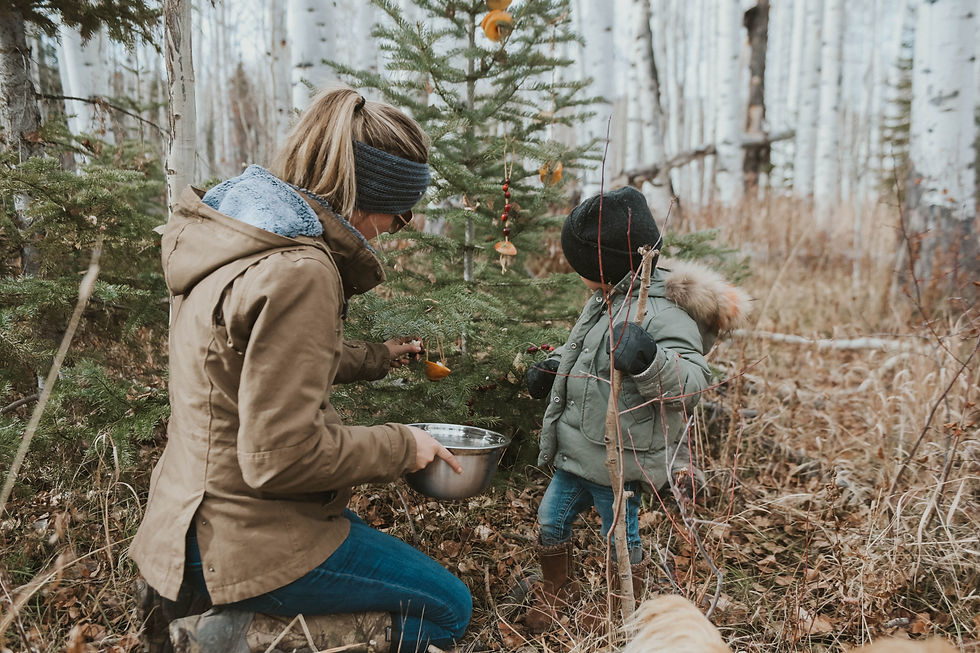
So as we pick out the perfect Christmas tree and decorate it, gather around for feasts with family and friends, and share gifts to remember the Greatest Gift Ever Given, we extend the spirit of those traditions in another way that brings our family outdoors. We find a special tree in the woods and decorate it with edible ornaments made just for wildlife - a woodland Giving Tree offered as a special gift just for them.

And the beauty of this tradition? It’s wonderfully simple, inexpensive, and adaptable. You don’t need crafting skills or fancy materials. Just a little time outdoors, a sense of wonder, and a few ingredients from the pantry. Whether you wander deep into the woods for your Giving Tree or choose a spot closer to home, it’s a tradition kids adore and adults treasure just as much.
Wildlife Friendly Ornaments
Here are 7 animal-friendly decorations our family loves making. These ornaments are great projects for even the youngest of wildlife lovers. If you have the opportunity to, create these outside to connect the concept to nature (and to minimize the clean up). Start with a walk or hike to collect materials like pinecones or dried grasses and spend time together preparing these ornaments as you talk about the wildlife you're sharing them with.
1 - Bird Seed Ornaments: Simple mixtures of birdseed (held together by suet or flavorless gelatin) pressed into shapes - stars, hearts, pinecones - hung with twine and irresistible to winter birds.
How to Make Them: Prepare a box of unflavored gelatin according to the package instructions. When the gelatin has dissolved fully, add 2 cups of birdseed and stir to combine. Spoon the seed mixture into cookie or biscuit cutters laid on a flat, parchment lined surface such as a cookie sheet. Use a straw to press a hole for your ornament string, then refrigerate overnight. The following day, allow the ornaments to come to room temperature and then remove them from the forms. String with natural twine.

2 - Cranberry & Popcorn Garlands: Strung together by busy little hands (and a perfect sneaky-learning opportunity to build pattern recognition and motor skills), bright red cranberries and fluffy popcorn add cheerful color to the branches and offer a winter treat to birds, squirrels, and deer.
How to Make Them: Pop unflavored/unbuttered popcorn, then thread it onto a string using a wide crochet needle. Alternate between popcorn and cranberries or make a pattern to complete a short section of garland. Sections of 5 feet or less hold up better than long strands.
3 - Apple & Orange Rounds: Sliced thin and strung up to dry in the cold, these sweet, natural ornaments become snacks for all the critters.
How to Make Them: Thinly slice apple and orange rounds using a mandolin or sharp knife. String them together into a garland with a wide needle or cut individual pieces of twice to make ornaments.
4 - Peanut Butter Pinecones: A natural pinecone covered in seeds is always a favorite for the birds.
How to Make Them: Have your kiddos collect pinecones on a hike or scavenger hunt. Roll the pinecones in any additive free nut-butter, then roll them into bird seed or pumpkin/sunflower seeds. Simple nestle the pinecones among the branches of your giving tree.
5 - Bundles of Grasses & Grains: Small bunches of wheat, barley, or dried grasses tied with twine.
How to Make Them: If you have a garden, grow a little batch or wheat or barley through the summer to feed to the wildlife in the winter. If not, simply find dried grasses (or even hay) to bundle up in small "bales" and tie with twine to hang from the tree.
6 - Fruit Bird Feeders: Hollowed out oranges make a perfect hanging feeder.
How to Make Them: Slice an orange in half and use a spoon to scoop out the some of the flesh, enough to make a small bowl of the orange half. Make an even hole on each side of the orange so you can string twine through it to hang from a branch. Fill the orange with seeds, suet (which you can find in a grocery store), or oat.
7 - Sunflower Seed Heads: Saved from warm summer days.
How to Make Them: Save sunflowers from summer and hang them upside down to dry until you're reading to hang them on your tree. Use a long wooden skewer to punch a hole through each side of the sunflower head, then attach twice so that the seeds face up, making a natural feeder for the wildlife.

The Real Reason for the Tradition
Whether you choose a far-off spot discovered on a snowy adventure or a tree within sight of home so you can enjoy watching the wildlife, decorating a Giving Tree slows you down in the best way. It reminds us that winter is most importantly a season of giving, not just of receiving - of thinking beyond ourselves and extending kindness to all...even if that lesson is learned by first sharing with the quiet, hearty creatures that call our woods home. That's something I always advocate; letting the beauty and character of nature shape ours when we lean in and look closely.
And when you’re back inside, warming fingers by the fire or sipping something hot under the glow of your own Christmas tree, you’ll know there’s a little bit of holiday magic happening out there in the forest too - wild and wonderful, just as nature intended.


Comments