.png)
How I Create Themed Learning Units for My Toddler to Learn Through Play
- Alexa Stoia | Hearth & Wander

- Sep 19, 2025
- 7 min read
Updated: Nov 16, 2025
When I first started doing “school” with my toddler, I knew I didn’t want rigid structure or worksheets that made learning feel like a chore. Cause I know that boring is a hard "no" with my girl. I also knew that it needed to be flexible, engaging and multi-faceted to match our busy lives. I wanted learning to be a natural extension of our days - hands-on, wonder-filled, and rooted in play.

That’s when I discovered the magic of themed learning units - simple, intentional collections of books, songs, Bible stories, crafts, activities, and even field trips that revolve around a common theme. Based on each letter of the alphabet, I’ve created 26 themes which each span a 2 week period, resulting in 52 weeks of learning roughly based on the order in which kids best learn their letters, starting with high frequency letters like s, a, t, i, p, n... Then I reorganized these themes to fit into the calendar of holidays, seasons, and activities already a part of our schedule.
You can choose any theme under the sun based on your interests or learning objectives and many "unit studies" can be found or bought online. Or you can get creative and use your favorite resources and mom blogs (why, hello there!) to help you shape your playful learning. However you choose to plan it out, these units make it easy to nurture curiosity and help your child make connections across their world.
And the best part? You don’t have to be a homeschool veteran, preschool teacher, or all-around super mom to start. Even with toddlers, learning through play lays a beautiful foundation for a lifelong love of discovery. And pre-planned units are the perfect place for quick activity, craft, and outing ideas when the days of mommin' babies and tots get looooong.
Why Learning Through Play Matters
Research shows that young children learn best through play. It’s how they process the world, build confidence, and strengthen development - from problem-solving and fine motor skills to vocabulary and emotional understanding.
When you incorporate learning into everyday play, your child isn’t just memorizing - they’re experiencing. This isn't about forcing them to sit and be taught. Imagine this...you create a theme around baking close to the holidays. Baking themed books become language development. Pouring flour and cracking eggs into a mixing bowl for cookies becomes early math and motor skill strengthening. Frosting sugar cookies works on their knowledge of colors. Delivering cookies to neighbors builds social skills and teaches kids they're part of a community. Voila! Sneaky learning built into your life…in ways you’re probably already teaching your children.
These moments of joy and exploration are the building blocks of early education.

How I Create Themed Learning Units for My Toddler to Learn Through Play
Creating a themed learning unit doesn’t have to be complicated and you can even find done-for-you options online. When I first started, I bought Paper Peony Press’ “The Magic of Childhood” which provides an entire year of themes with vocab words, an associated Bible devotional, activity ideas, and flashcards. But I wanted to build out some of the themes and add my own twist, so I created my own homeschool “curriculum” and learning units.
Here’s how I build ours for each 2 week block - in a way that’s flexible, realistic, and fun.
1. Choose Your Themes
If you're a planner like I am, preplan a year, quarter, or month of themes so you can work them into your schedule organically. Pick themes that tie naturally into your routine, holidays, seasonal celebrations, family activities, and favorite things. You don't have to assign themes based on letters but it's a great learning tie-in to teach the alphabet. Here's some examples:
N is for Nativity, leading up to Christmas
B is for Birthday, at the beginning of their birthday month
G is for Gardening, in the springtime when you’re starting seeds
H is for Harvest, in the fall when you plan an annual trip to the pumpkin patch
R is for Reading, when colder days keep you curled up indoors more often
T is for Thankfulness, at the end of November and over Thanksgiving
Themes make learning cohesive and meaningful when you tie them to real life. Work with the plans you already have. I've learned 2 weeks is the perfect timeframe to enjoy most of the activities I’ve planned without feeling rushed.
Now, download this free Preschool Themed Unit Planning Chart I have for you and dive into the fun part - seeking out ideas for books, activities, crafts, and more.
2. Gather Books and Stories
Start with a curated book basket. I use my local library’s hold system to reserve books that match our theme a week or two before the theme starts. Pinterest and mom blogs are gold mines for themed reading lists, as well as simply using the library’s online catalog to search by keyword or title.
I leave our book basket accessible in the living room so my toddler can pull favorites out throughout the unit. Stories are the anchor of our learning and feed fun ideas that we can incorporate. Plus, when I present a new themed basket, she’s excited for what new learning will bring in the weeks ahead.
Here’s a perfect example: Add “If you Give a Moose a Muffin” to your book basket. Based on the book, make muffins, eat them as a snack with jam, teach kids to sew a button, make sock puppets, put on a puppet show, dress up and use your imagination, and pick blackberries if that’s available to you (make jam from store bought blackberries if not). Don’t rush through those things in a day. Have fun, linger over them, and use these ideas to fill your days with joy and natural learning. Your kiddos won’t even realize this is “school.”

3. Plan Hands-On Activities
I love this part! Adapt ideas to fit your child’s skill level and don’t be afraid to try new things, even ones that are - as of now - out of their comfort zone. That’s what learning is all about! Include a mix of:
Fine motor skills: cutting, threading, pouring, shaping playdough
Gross motor skills: jumping and climbing like animals, dancing, obstacle courses, movement games, hiking
Sensory play: sensory bins, texture exploration, water or sand play, talking about the 5 senses
Discovery: creative construction, collecting natural treasures, sorting, observing through binoculars or a magnifying glass
Imaginative: play kitchen, treasure hunt, dress up, puppet shows
Life Skills: gardening, cutting vegetables, cleaning, setting the table
Crafts: painting, drawing/journaling, gluing natural materials, stringing beads
Literacy & phonics: tracing, letter puzzles, word identification
These experiences let your child learn through touch, motion, and imagination - the way they’re naturally wired to. You’ll notice how many of these hands-on ideas overlap and combine sets of skills and that’s even better!
4. Add Music and Movement
Toddlers learn beautifully through music and motion. Find songs and fingerplays that connect to your theme and subtly teach concepts like numbers or animals - “Five Little Pumpkins,” “Old MacDonald,” “The Itsy Bitsy Spider,” or “Animal Freeze Dance.” I love toddler songs that tweak the words of a familiar tune to give it a new concept. Or simply make up your own movements, even if they’re not set to music, based on what you’re learning - twirl like a leaf, dance like a ballerina, scurry like a squirrel. Grab a set of shakers (there’s a craft idea for you!) or a basket of kiddo-sized instruments and sing along. Take it out into nature for even more fun.
5. Include Bible Stories and Heart Lessons
For faith-based families, include a Bible story or simple verse that connects to your theme - like learning about creation during a nature week or reciting verses about thankfulness during Thanksgiving.
Use these moments to talk about character, kindness, and gratitude in ways your child can understand. Use little moments like sitting at the breakfast table, taking a walk, or sharing a snack to discuss your key verse or story, say a prayer, or simply be grateful for the world God created.
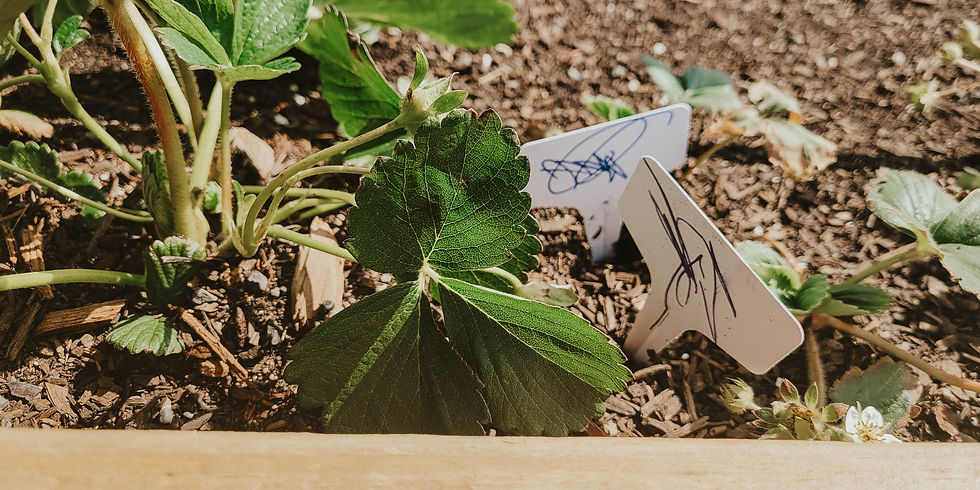
Turn a place like the garden into a center for learning! My little helper has been hard at work "labeling."
6. Plan Meaningful Field Trips
Tie “field trips” or outings into your themes. It can be as simple as a stop at the library or local farmer’s market, using the grocery store as a place to learn colors, or taking the dog for a short hike. Or you can use your learning units as a perfect excuse for some of your bucket-list activities like a trip to the museum, U-pick farm, or botanical garden. By associating these fun activities, you reinforce the themes and ideas that you’re learning throughout your theme in real life scenarios. You're not teaching obscure concepts; this is real knowledge that can be seen, touched, tasted, heard, smelled, and experienced.
7. Don’t Forget the Snacks!
Snacks can tie right into your theme - pumpkin muffins for October’s “Harvest” theme or rainbow fruit skewers for “Colors.” Little details like these make your themes come alive. Get your kids involved in the process of preparing and assembling these snacks too. Even better if you take these snacks outdoors or bring them along on a field trip!
The Beauty of Themed Learning
There it is - How I Create Themed Learning Units for My Toddler to Learn Through Play. The goal isn’t perfection - it’s presence. Some days we check every box; other days, we read one story and play outside. Themed units aren’t about forcing your learning objectives or filling time - they’re about filling your child’s heart and mind with joy and curiosity.
Remember: you’re not replicating school at home - you’re creating a home where learning happens naturally.
By building themed learning units, you’re doing more than teaching your toddler letters and colors - you’re cultivating curiosity, connection, and confidence. These small, intentional moments of instruction weave faith, nature, and play into your days - helping your little ones see that the world is full of things to discover and that home is the best place to start.
Have fun playing, mama!


Comments